Multidisciplinary Care

multidisciplinary care icon

Multidisciplinary Care

This page provides resources to support the implementation of the role of the multidisciplinary team recommendations in the COSA Cancer-related Malnutrition and Sarcopenia Position Statement.

Position Statement Recommendation

Health services should ensure a broad range of health care professionals across the multidisciplinary team have the skills and confidence to recognise malnutrition and sarcopenia to facilitate timely referrals and treatment.

Multidisciplinary teams should work towards an individualised and coordinated approach to treating cancer-related malnutrition and sarcopenia.

Importance of multidisciplinary care for cancer-related malnutrition and sarcopenia

Cancer-related malnutrition and sarcopenia require care by a multidisciplinary team (MDT) that integrates supportive interventions, specifically nutrition and exercise, to improve nutrient intake, muscle mass, physical functioning, quality of life, and treatment outcomes.

For more information on the roles and responsibilities of the multidisciplinary cancer care team and common triggers for referral to a dietitian, physiotherapist or exercise physiologist refer to the Roles and Responsibilities fact sheet.

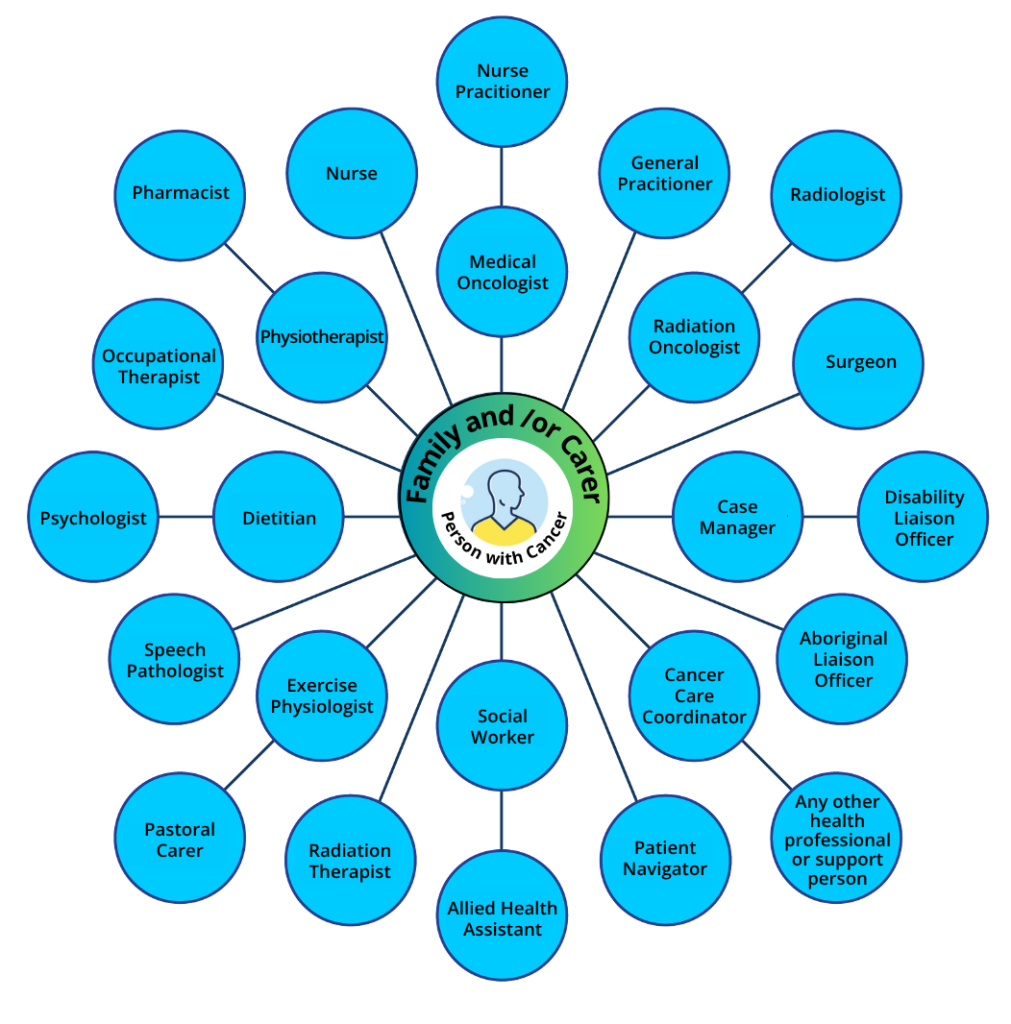
Core providers of multidisciplinary care for cancer-related malnutrition and sarcopenia*

multidisciplinary care core providers

* Please note this is not an exhaustive list and not all treating cancer centres will have access to all of these disciplines.

Benefits of multidisciplinary cancer care in the management of cancer-related malnutrition and sarcopenia:

A coordinated approach to the treatment of cancer-related malnutrition and sarcopenia requires the specialist skills of various members of the multidisciplinary cancer team. People with cancer may experience all or some of the benefits outlined below.

person with cancer icon

For the person with cancer

  • Better patient outcomes
    • quality of life
    • treatment outcomes
    • nutritional status
    • muscle mass
    • physical functioning
  • Improved management of psychosocial and emotional needs
  • Shorter timeframe from diagnosis to treatment
  • Care aligned to clinical practice guidelines
  • Improved treatment and quality of care
  • More opportunities to participate in clinical trials
  • Better access to health information

health professional icon

For the health professional

  • Better patient outcomes
  • Enhanced coordination of care
  • Early identification of care needs
  • Streamlined treatment pathways
  • Reduced duplication of services
  • Enhanced communication and sharing of information
  • More opportunities for education and mentoring
  • Improved mental health and wellbeing
  • Improved team functioning

Exemplars of evidence-based care in practice

The following case study has been developed as exemplars of evidence-based care in practice. It is hoped they will help to support the implementation of the position statement recommendations into practice.

Prehabilitation for patients undergoing GI surgery
What is the role of oncologists and surgeons?

Scroll to Top